



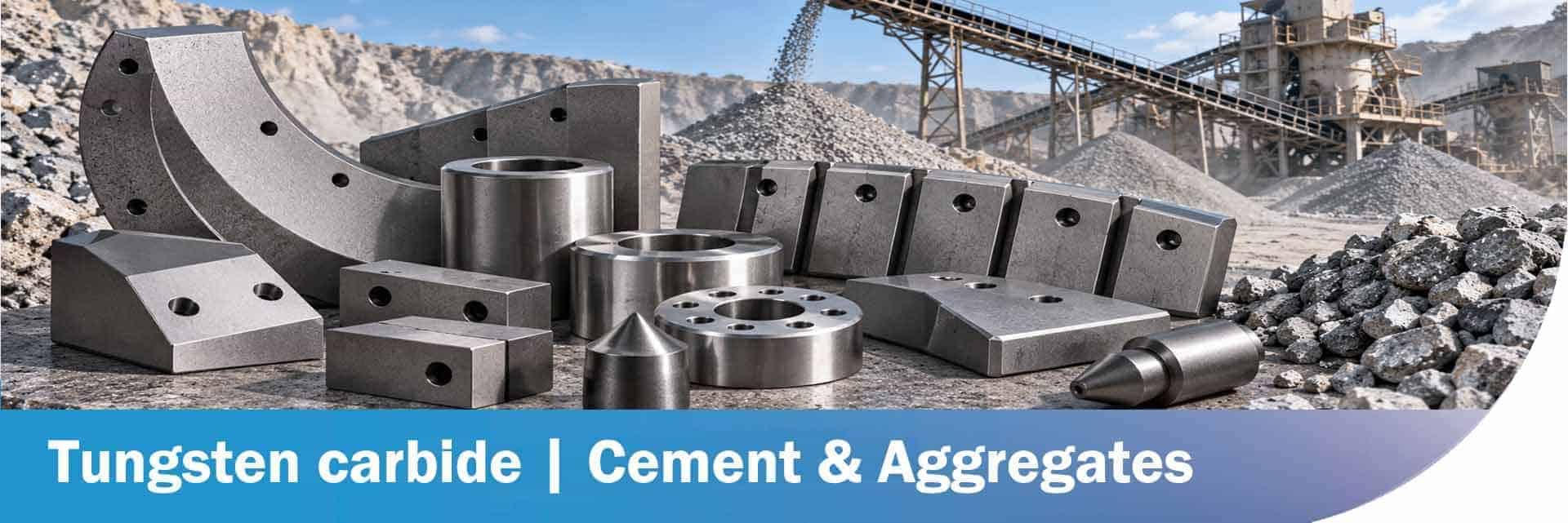
Cement and aggregate processing exposes critical components to severe abrasion, particle erosion, impact, and mechanical loading during crushing, grinding, conveying, and material handling.
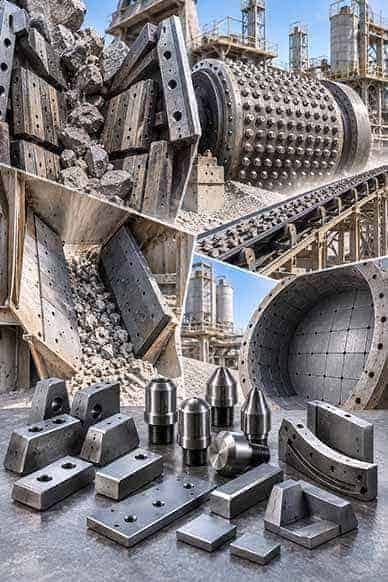
Grinding and milling operations expose components to sustained contact with clinker, raw materials, and abrasive mineral particles. Fine particles can progressively remove material from working surfaces, while repeated contact and mechanical loading may contribute to dimensional wear.
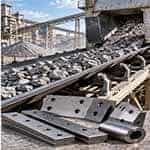
Conveyors, chutes, transfer points, and classification equipment handle continuous flows of abrasive bulk materials. Sliding contact, particle impingement, and changes in material direction can create localized wear, particularly where particles repeatedly strike or move across exposed surfaces.
EnduraCarbide Solutions manufactures custom tungsten carbide wear components for crushing, grinding, conveying, and material-transfer applications. We work from customer drawings, samples, and technical specifications to develop components suited to the wear conditions, mechanical loads, and dimensional requirements of each application.
Our technical team reviews application conditions, wear patterns, component geometry, and material requirements to support component development. Controlled manufacturing and inspection help maintain consistent material quality and dimensional accuracy.
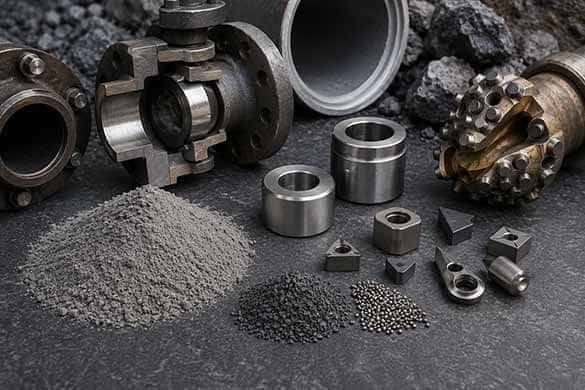
Cement and aggregate processing exposes wear-critical components to abrasive materials such as clinker, limestone, sand, gravel, crushed rock, and raw meal. EnduraCarbide Solutions manufactures custom tungsten carbide wear components for demanding crushing, grinding, conveying, screening, and material-handling applications. Application-specific carbide grades and component designs help balance wear resistance, toughness, and dimensional stability under the expected operating conditions.
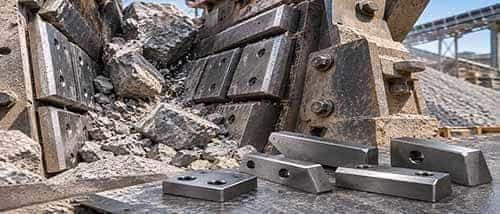
Tungsten carbide inserts help protect crushing components exposed to severe abrasion, repeated impact, and high mechanical loading during material size reduction.
Main types:
Applications: Limestone crushing, aggregate production, clinker crushing, primary and secondary crushing, and other abrasive size-reduction operations.
Tungsten carbide inserts help protect crushing components exposed to severe abrasion, repeated impact, and high mechanical loading during material size reduction.
Main types:
Applications: Limestone crushing, aggregate production, clinker crushing, primary and secondary crushing, and other abrasive size-reduction operations.
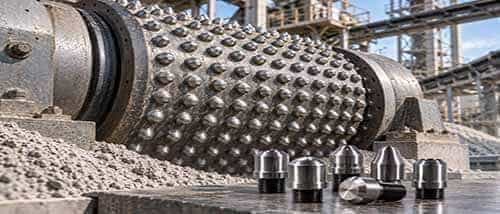
Tungsten carbide wear components provide high hardness and compressive strength for grinding surfaces exposed to abrasive materials and high contact pressures.
Main types:
Applications: Roller presses, HPGR systems, grinding rollers, raw-material grinding, clinker grinding, and other high-pressure grinding operations.
Tungsten carbide wear components provide high hardness and compressive strength for grinding surfaces exposed to abrasive materials and high contact pressures.
Main types:
Applications: Roller presses, HPGR systems, grinding rollers, raw-material grinding, clinker grinding, and other high-pressure grinding operations.
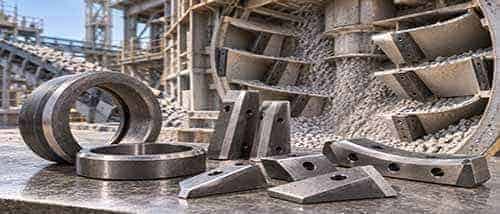
Tungsten carbide wear components help resist abrasion and particle erosion in equipment used to separate, classify, and control material size.
Main types:
Applications: Screening equipment, classifiers, separators, crushing circuits, grinding circuits, and aggregate-sizing operations.
Tungsten carbide wear components help resist abrasion and particle erosion in equipment used to separate, classify, and control material size.
Main types:
Applications: Screening equipment, classifiers, separators, crushing circuits, grinding circuits, and aggregate-sizing operations.
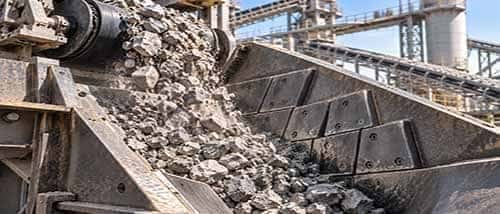
Tungsten carbide wear components provide localized protection in areas exposed to continuous material flow, sliding abrasion, particle impact, and repeated loading.
Main types:
Applications: Chutes, hoppers, bins, transfer points, conveyors, clinker handling, and aggregate transport systems.
Tungsten carbide wear components provide localized protection in areas exposed to continuous material flow, sliding abrasion, particle impact, and repeated loading.
Main types:
Applications: Chutes, hoppers, bins, transfer points, conveyors, clinker handling, and aggregate transport systems.
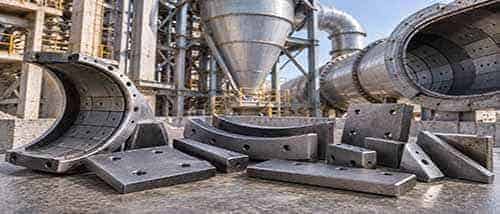
Tungsten carbide liners, plates, tiles, and inserts protect critical surfaces exposed to severe abrasion, particle erosion, and repeated material contact.
Main types:
Applications: Crushers, mills, cyclones, ducts, pipelines, elbows, silos, and other severe-wear areas.
Tungsten carbide liners, plates, tiles, and inserts protect critical surfaces exposed to severe abrasion, particle erosion, and repeated material contact.
Main types:
Applications: Crushers, mills, cyclones, ducts, pipelines, elbows, silos, and other severe-wear areas.
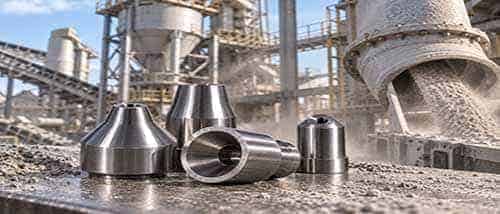
Tungsten carbide nozzles and flow-path components help resist particle erosion and dimensional wear in abrasive air, dust, slurry, and material-flow applications.
Main types:
Applications: Dust-control, material-conveying, process-air, slurry-handling, and other particle-laden flow systems.
Tungsten carbide nozzles and flow-path components help resist particle erosion and dimensional wear in abrasive air, dust, slurry, and material-flow applications.
Main types:
Applications: Dust-control, material-conveying, process-air, slurry-handling, and other particle-laden flow systems.
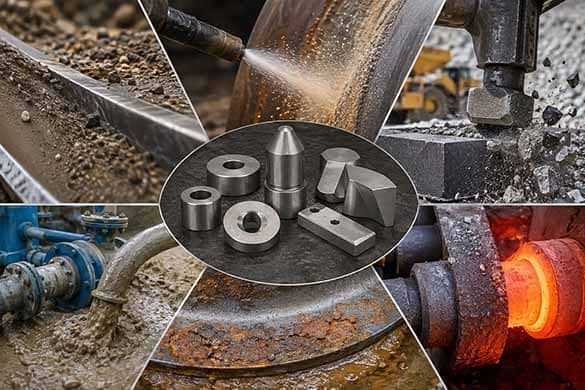
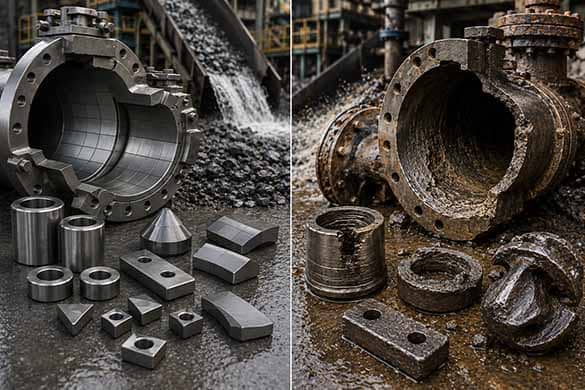
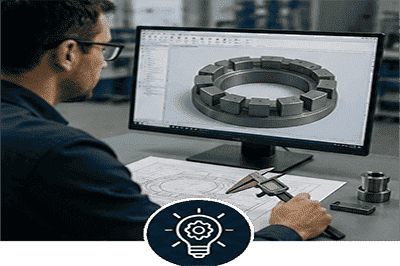
Every processing application presents different wear and loading conditions. Our engineers evaluate abrasive particle characteristics, impact and mechanical loading, material flow, component geometry, and dimensional requirements before recommending a suitable carbide grade and component design. This engineering-first approach helps balance wear resistance and toughness for crushing, grinding, conveying, and material-transfer applications.
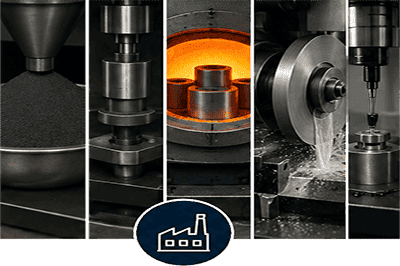
We use 100% virgin tungsten carbide raw materials with no recycled carbide content. Each batch is independently formulated for the application, with controlled carbide composition, binder content, particle characteristics, and additive selection. In-house control of powder preparation, milling, pressing, sintering, precision grinding, EDM machining, finishing, and final inspection helps support consistent microstructure, dimensional accuracy, and repeatable quality from prototype through production.
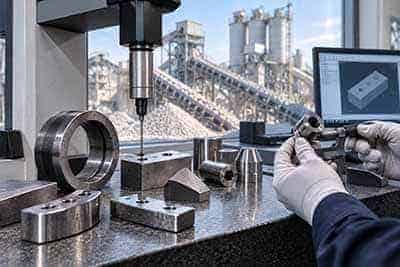
With more than 30 years of manufacturing experience and ISO 9001 and ISO 14001 certified production, we support OEMs, equipment manufacturers, and industrial users with responsive engineering assistance and custom-engineered carbide components. Our team works from customer drawings, samples, and specifications to support material selection, component development, and manufacturing for demanding cement and aggregate processing applications.
Experiencing Premature Wear in Cement & Aggregate Processing?
Our engineers develop custom tungsten carbide wear components for demanding crushing, grinding, screening, conveying, and material-handling applications exposed to abrasive minerals, particle erosion, impact, and mechanical loading.